

We Love PA History! Podcast is sponsored by Markosky Engineering Group, Inc.
Pennsylvania is the Keystone State, and its history holds so many of the stories that shaped America. We Love PA History! is an every-other week conversation featuring authors, historians, preservationists and storytellers. Each episode will dive into events, people, and places that define Pennsylvania's heritage, showing how the past still shapes our present. Pennsylvanian's love their history, and we want to celebrate that.
The views, opinions, and statements expressed by guests on this podcast are their own and do not necessarily reflect the views of the host, the production team, the sponsor, or any affiliated organization.
Quick Links to Episodes:
Thrill Ride: The Transformation of Hersheypark, John Haddad
Independence National Historical Park: An Insider's History, Bill Kashatus
Fallingwater at 90: Preserving a World Heritage Site for Generations to Come, Justin Gunther
All About Those Blue and Gold Markers...and the Titanic too!, Bill Lewis
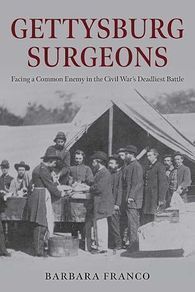
Gettysburg Surgeons: Facing a Common Enemy, Barbara Franco
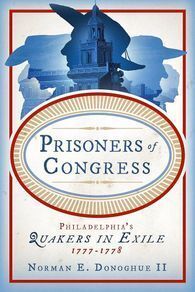
Prisoners of Congress, Philadelphia's Quakers in Exile 1777-1778, Ned Donoghue
The Scots Irish of Early Pennsylvania, A Varied People, Judith Ridner
Fort Ligonier and Washington's Brush with Death on the Battlefield, Matt Gault
Heinz History Center: Sharing the Stories of People, Andy Masich
William Penn and "The Holy Experiment", Andrew Murphy
Carpenters' Hall, Michael Norris
Why Pennsylvanians Love Our History, Andrea Lowery
Release Date: November 3, 2026
Click here to be directed to the Podcast available 11/4/26 at 4pm
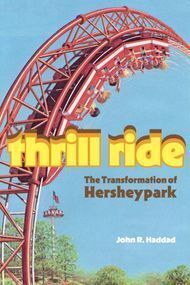
Thrill Ride: The Transformation of Hersheypark
John R. Haddad
When most people think of Hersheypark, images of chocolate and roller coasters often come to mind. But in Thrill Ride: The Transformation of Hersheypark, Dr. John R. Haddad dives deeper into the park’s rich history and cultural evolution.
Thrill Ride offers both a nostalgic journey for longtime visitors and a detailed look at how Hersheypark evolved from a community amusement park to a nationally recognized theme park, preserving the charm of a small Pennsylvania town while attracting millions of guests.
“Right, so if you walk into Hershey Park today, their formula for success is pretty obvious — chocolate theming plus thrill rides. But it wasn’t always like that,” Haddad explained. “Hershey Park has a very long history. It dates all the way back to 1906, when Milton Hershey built it as a recreational venue for chocolate workers and their families. It underwent a massive change in the early 1970s, when it ceased being an amusement park and started being a theme park.”
The early 1970s transformation incorporated historical theming designed to reflect the local culture. Visitors experienced “merry old England from the 1500s, the German Rhineland region from the 1800s, the traditional lifestyle of the Pennsylvania Dutch, and Pennsylvania’s anthracite coal mining districts,” Haddad said. “The park preserved some of those wonderful old rides, like the Comet roller coaster or the Carousel… In the new theme park, these rides represented nostalgia for an earlier era and represented the town of Hershey the way it was.”
Even today, subtle touches preserve the park’s history. “If you look closely, there are a handful of bricks in that Starbucks that look different from all the other bricks. Those are original bricks from the front entrance to Hershey Park,” Haddad shared, highlighting the park’s dedication to honoring Milton Hershey’s legacy.
About Dr. John R. Haddad
Dr. Haddad holds a Ph.D. in American Studies from the University of Texas (2002), an M.A. in English from Yale (1996), and an A.B. in English from Harvard (1991). He regularly teaches undergraduate courses on American popular culture, the Asian American experience, the American Renaissance, and the Gilded Age. At the graduate level, he offers seminars on nineteenth-century America, research methods, American literature, and “pivotal texts” in American cultural history – texts that started something new or forced the culture to change directions. He has been the recipient of the Faculty Service Award, the Faculty Teaching Award, and the James Jordan Award for teaching excellence.
While teaching in China and Japan in the 1990s, Dr. Haddad developed an interest in America’s historical contact with Asia that is reflected in his scholarly work. His first book, The Romance of China: Excursions to China in U.S. Culture, 1776-1876, was published by Columbia University Press in 2006. It investigated ways Americans learned about China in the nineteenth century: museum exhibits, trade objects, travel writing, missionary literature, panoramic paintings, and international expositions. In 2010-2011, he held a Fulbright grant for research and teaching at the University of Hong Kong. That experience led to his second book, which examines the America’s early relationship with China: America's First Adventure in China: Trade, Treaties, Opium, and Salvation (Temple University Press, 2013). His third book, Cultures Colliding: American Missionaries, Chinese Resistance, and the Rise of Modern Institutions in China, explains how American missionaries evolved from being strictly evangelists to being exporters of culture – founders of schools, colleges, museums, hospitals, and YMCA chapters (Temple University Press, 2023). In the area of popular culture, he has recently written a cultural history of Hersheypark titled Thrill Ride: The Transformation of Hersheypark (Penn State University Press, 2025).
email: jrh36@psu.edu
Release Date: October 21, 2026
Click here to be directed to the Podcast
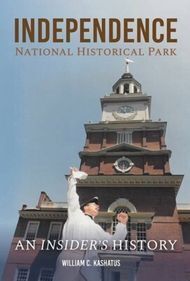
Independence National Historical Park: An Insider's History
Bill Kashatus
Historian, Educator, Writer, former Park Ranger, Thomas Paine interpreter, and a continuing volunteer at the site, Bill Kashatus gives us an in-depth examination of the major historical events that occurred at Independence Hall, Carpenters' Hall, Congress Hall, and Franklin Court, among other park sites, as well as the founding fathers who shaped those events. Kashatus shares his unique perspective on those events, and how "historical memory" – the shaping of events in people’s mind over time – plays with facts. The book is an ideal companion for those who desire more than the brief overviews presented in tourists' guidebooks. The book is based on primary source documents, including - Journals of Congress; - Records of the Pennsylvania Assembly; - contemporaneous newspaper accounts; - the diaries and papers of such founding fathers as Benjamin Franklin, George Washington, John Adams, and Thomas Jefferson; and - more-recent scholarship on early American history. Kashatus shares his unique perspective as an insider and a witness to history.
About Bill Kashatus
William C. Kashatus resides in the greater Philadelphia area and is a historian, educator, writer, and former park ranger at Independence National Historical Park. He earned a master’s in history at Brown University and a doctorate at the University of Pennsylvania. Kashatus has taught at Penn’s Graduate School of Education, West Chester University, and the William Penn Charter School. He is the author of two dozen books on biography and American history.
William’s LinkedIn profile: linkedin.com/in/william-kashatus-2a6898a8
Email: billkashatus@yahoo.com
Release Date: October 7, 2026
Click here to be directed to the Podcast
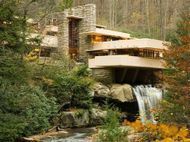
Fallingwater at 90: Preserving a World Heritage Site for Generations to Come
Justin Gunther, Director of Fallingwater
This year marks Fallingwater's 90th anniversary, and its 63rd year giving tours to the public. Fallingwater is one of Frank Lloyd Wright's most acclaimed works and the one that best exemplifies his philosophy of organic architecture: the harmonious union of art and nature. Fallingwater Director Justin Gunther says "Because of that tie to nature, people that come and see Fallingwater just have an instant connection to it because nature's inside of all of us. So it's just this powerful place that's sort of awe-inspiring, yet completely accessible. And yeah, it floats over a waterfall, which is kind of crazy to think that a house can just float over a waterfall, but it's also intensely personal and maybe somewhat humbling experience to be here."
Fallingwater is one of three UNESCO World Heritage sites in Pennsylvania. Gunther explains 'as part of inscription as a World Heritage site, you commit to long-term stewardship of the resource, obviously…. we created a framework for a pretty comprehensive preservation campaign to basically waterproof the house… three years ago, embarked on a pretty massive preservation project to address all of those water infiltration issues. And we just wrapped it up this past spring… we're very glad the scaffold's down and that Fallingwater is waterproofed. And it happened to align with another great thing, which is our 90th anniversary this year. So we were able to celebrate the preserved house for generations to come at our 90th anniversary…"
About Justin Gunter:
Justin Gunther is Vice President of the Western Pennsylvania Conservancy and Director of Fallingwater, Frank Lloyd Wright’s masterpiece of organic architecture, which exemplifies the harmonious relationship between people and nature through art and design. Prior to this role, Justin served in preservation roles at other historic sites, including architectural historian for Thomas Jefferson’s Virginia State Capitol, manager of restoration for George Washington’s Mount Vernon, and curator for Fallingwater. He has also taught historic preservation at the Savannah College of Art and Design and University of Pittsburgh, where he focused on economic redevelopment, recent past preservation, and the creative interpretation of heritage sites.
A Richmond native, Justin has an undergraduate degree from Virginia Commonwealth University, and his master of fine art’s degree was completed at the Savannah College of Art and Design. Alongside his position at Fallingwater, Justin takes great interest in community-based initiatives through positions on boards and special committees. He currently serves on the board of the Frank Lloyd Wright Building Conservancy, Pittsburgh Architecture Foundation, the International Advisory Committee for Iconic Houses, Jack Heinz Advisory Board of the Pittsburgh Symphony Orchestra, and chair of the Frank Lloyd Wright World Heritage Council.
https://fallingwater.org/

Release Date: September 23, 2026
Click here to be directed to the Podcast
All About Those Blue and Gold Markers...and the Titanic Too!
William V. Lewis
Dr. William V. Lewis, Jr. is a Commissioner of the Pennsylvania Historical and Museum Commission and serves as a Commission liaison to the Pennsylvania Heritage Foundation. He chairs the state Historical marker selection panel for the Pennsylvania State Historical Preservation Office, under the PHMC.
Professionally, he is the Managing Principal and PIM Portfolio Manager at Lewis, Litwinsky & Associates with the Wells Fargo Advisors Financial Network in Wilkes-Barre. Lewis holds a BA and MBA from Wilkes University, an MSFS from The American College for Financial Services, an MA in American History from Pace University, and an MPA and doctorate from Lehigh University. He has served on the adjunct faculty of Wilkes University and King’s College.
Lewis is a past president of the Luzerne County Historical Society, past president of the Northeast Chapter, Sons of the American Revolution and an officer of the Wyoming Commemorative Association. He served on the national Board of Governors of the American Red Cross, as a board member of Family Service America and on the National Advisory Council of the Center for the Study of the Presidency. He currently is a board member of the Academy of Certified Portfolio Managers.
Release Date: September 9, 2026
Click here to be directed to the Podcast
Gettysburg Surgeons: Facing a Common Enemy
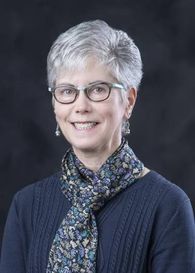
Barbara Franco, Public Historian
About Barbara Franco
As a public historian, curator, and museum director Barbara Franco has written and consulted about museum practice and historical interpretation. Her broad interest in the social, cultural, and intellectual history of the 19th century includes the decorative and fine arts, communal societies, fraternal organizations, the role of religion, and the Civil War era. She served as executive director of the Pennsylvania Historical and Museum Commission, the Historical Society of Washington, D.C., and Assistant Director for Museums at the Minnesota Historical Society. She is Founding Executive Director Emerita of the Gettysburg Seminary Ridge Museum, President of the Advent Historical Society, and a board member of the National Museum of Civil War Medicine.
bfranco3@verizon.net
Release Date: August 26, 2026
Click here to be directed to the Podcast
Prisoners of Congress, Philadelphia's Quakers in Exile 1777-1778
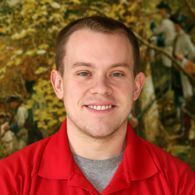
Ned Donoghue, Author
Norman E. “Ned” Donoghue II is a former practicing lawyer, former international charity fundraiser and now a full-time historian and author and speaker. He is a graduate of Henderson High School (West Chester, Pennsylvania), Williams College (History major, honors) and Duke University School of Law. He now resides in Philadelphia and Cecil County, Maryland.
Ned has led a life devoted to historical milestones. He practiced law as a specialist in private client law (trusts and estates) and capped his career serving as chair of the Probate and Trust Law Section of the Philadelphia Bar Association. Thereafter he served as director of planned giving for The Philadelphia Orchestra Association for five years, raising funds in the Orchestra’s $130M Endowment Campaign.
Ned served 1983-2023 as counsel, officer and board member of the Princess Grace Foundation-USA and presently serves as an emeritus trustee. The Foundation is well known for its recognition of excellence in emerging artists in theater, dance and film in America in tribute to H.S.H. Princess Grace of Monaco, the former Grace Kelly. The Foundation awards annual career-enhancing grants.
Ned was a co-founder of Philadelphia Volunteer Lawyers for the Arts and its second president. He co-chaired International Visitors Council of Philadelphia and was its “Citizen-Diplomat of the Year” in 2010. He was appointed by Mayor of Philadelphia Wilson Goode as an officer and board member of We The People 200, Inc., the nonprofit charged with executing the plan for the national celebration in Philadelphia of the Bicentennial of the US Constitution (1787-1987).
He is the author of Prisoners of Congress, Philadelphia’s Quakers in Exile, 1777-1778 (Penn State University Press, 2023), the first comprehensive scholarly monograph on the Quaker Exile from Philadelphia, a chronicle of the untold story of the men who became among the nation’s first political prisoners. He has spoken about this book at over thirty institutions, including the American Philosophical Society, the Library Company of Philadelphia, Anderson House – the headquarters of the Society of The Cincinnati, embassy row in Washington DC, The Philadelphia Club, Cosmopolitan Club, The Daughter of the American Revolution, The Society of Sons of the American Revolution, and numerous smaller historical societies and clubs.
Release Date: August 12, 2026
Click here to be directed to the Podcast
The Scots Irish of Early Pennsylvania, A Varied People
Judith Ridner, Professor of History at Mississippi State University
About Judith Ridner
I am a historian of early America with interests in the American frontier, ethnicity and immigration, oral and public history. Although most of my research to date focuses on the eighteenth-century Pennsylvania and the Scots-Irish, my work has broadened over time to include oral history, public and digital history, and especially material culture.
I’m currently working on two book projects. In Clothing the Babel: The Material Culture of Ethnic Identity in Early America, I’m analyzing how clothing and other items of personal adornment that various European immigrants wore influenced how eighteenth-century Americans perceived and reacted to them. My other project, The Dirty History of Soap, traces the material history of this ordinary substance, from the ancient world to the present.
I am also co-editor of the academic journal, Early American Studies: An Interdisciplinary Journal.
1994 Ph.D., History, The College of William & Mary
1988 M.A., History with a concentration in Historical Archaeology, The College of William & Mary
1986 B.A., History and International Studies, Dickinson College -- Phi Beta Kappa, Magna Cum Laude
Release Date: July 29, 2026
Click here to be directed to the Podcast
Fort Ligonier and Washington's Brush with Death on the Battlefield
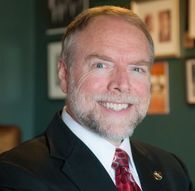
Matt Gault, Director of Education and Living History at Fort Ligonier
Matt Gault was named Fort Ligonier’s Director of Education and Living History in 2025 after acting as the Director of Education since May of 2020. Matt’s career began at Fort Ligonier as a college intern while enrolled at the University of Pittsburgh at Johnstown. Upon graduation, he was selected to join Fort Ligonier’s Education Department as the Assistant Director of Education in 2014.
During his time at the Fort, Matt has received several prestigious recognitions including the Laurel Highlands Visitors Bureau 2017 Tourism Employee of the Year Award and the PA Museums Association Carol Wickkiser Award presented to an outstanding young museum professional.
Matt leads the development and production of Fort Ligonier’s educational initiatives including exciting educational and living history programs for students and visitors from all across the globe. Matt is also known for his riveting portrayal of a young George Washington and will go to great lengths to increase awareness about French and Indian War history. In August 2021, clad in a breechcloth, Matt was the only historical interpreter to complete a 30-mile hike from Fort Ligonier to Bushy Run to commemorate Bushy Run’s anniversary. Matt resides in Greensburg, Pennsylvania with his family.
Release Date: July 15, 2026
Click here to be directed to the Podcast
Heinz History Center: Sharing the Stories of People
Andy Masich
President and CEO of the Senator John Heinz History Center, Pittsburgh PA
"People are interested in the stories of people..."
"David McCullough, America's favorite historian, Pulitzer Prize winner, Adams, Truman, the Johnstown Flood, he used to say, he was actually quoting the librarian of Congress when he said trying to build a future without understanding the past is like trying to plant cut flowers. You know, it's just not gonna happen. So I think that those roots are important and it's up to us to show that younger generation how they're connected to the past. And young people, the thing that they're interested in are the same things that we were interested in, and that is people. People are interested in the stories of people, and whether you show them that in a book, a film, a performance, an exhibition, or a podcast, it really doesn't matter. It's the stories, the engaging stories of people, the inspiring stories of people that we need to focus on as museum professionals and educators."
About Andy Masich:
Masich is president and CEO of the Smithsonian-affiliated Senator John Heinz History Center, recently recognized by USA TODAY as America’s #1 History Museum three years in a row. The History Center has also been named Pittsburgh’s Best Museum by readers of Pittsburgh Magazine for five consecutive years.
Since 1998, he has led Pittsburgh’s 370,000 square-foot Heinz History Center and family of museums, which includes the Western Pennsylvania Sports Museum; Meadowcroft Rockshelter and Historic Village (the oldest site of human habitation in North America) located in Avella, Pa.; and the Fort Pitt Museum.
Under Masich’s leadership, the History Center has earned national recognition for its award-winning exhibitions and innovative educational programs that focus on the American experience with a Western Pennsylvania connection.
A respected authority on American history and Western Pennsylvania’s heritage and culture, Masich is a trusted expert for national media outlets, including the Associated Press, New York Times, the Travel Channel, the History Channel, CNN, and more. Masich is the host of the popular “Time Capsules” history podcast on KDKA-AM radio and is a monthly contributor to KDKA-TV’s morning show, “Pittsburgh Today Live.”
Masich has also authored or co-authored award-winning books on a wide range of subjects and is an adjunct professor of history at Carnegie Mellon University.
Masich currently serves as a commissioner (and former chairman) of the Pennsylvania Historical and Museum Commission (PHMC); and on the America250PA Commission, which is charged with developing commemorative programs leading up to the nation’s 250th anniversary in 2026.
https://www.heinzhistorycenter.org/

Release Date: July 1, 2026
Click here to be directed to the Podcast
William Penn and
"The Holy Experiment"
Andrew Murphy, Professor and Dept Chair
Political Science
University of Michigan
You can't understand Pennsylvania history - "The Holy Experiment" - without knowing about William Penn. There's no better source than the man who wrote the biography of William Penn.
Reflecting his interest in the intersections between political theory and political action (as well as his status as a born-and-raised Pennsylvanian), Murphy has engaged deeply with the life, career and political thought of William Penn, a figure who brought theory and practice together in the early modern British Atlantic. He is the author of William Penn: A Life (Oxford, 2019) and Liberty, Conscience, and Toleration: The Political Thought of William Penn (Oxford, 2016); and co-editor (with John Smolenski) of The Worlds of William Penn (Rutgers, 2019). A scholarly edition of Penn's political writings for the Cambridge Texts in the History of Political Thought series appeared in 2021.
Murphy's research takes up the intersections between politics and religion, in both historical and contemporary contexts. He is particularly interested in the emergence of religious liberty and liberty of conscience in early modern England and America, and the ongoing ramifications of these debates as they continue to unsettle American politics. He is the author, most recently, of Toleration: A Very Short Introduction (Oxford, 2025), which canvasses the history, development, and contemporary global status of toleration as both a concept and a contested legal practice. His current research continues to bring together the political and the religious, exploring the concept of political martyrdom and the ways in which studying politically-charged deaths can help us make sense of the complex interplay of death, religion, politics, collective memory, and symbolic power.

Release Date: June 17, 2026
Click here to be directed to the Podcast:
Carpenters' Hall
Michael Norris, Executive Director of
Carpenters' Company of the City of Philadelphia
As the Executive Director of the Carpenters’ Company of the City and County of Philadelphia, which owns and manages Carpenters’ Hall, a National Historic Landmark in Philadelphia’s historic district whose members constitute the nation’s oldest continuously operating craft guild, Michael oversees all of the Company’s programmatic and operational activities. Michael joined the Company in June 2019, after a seven-year tenure as Vice President of External Relations and Chief Strategy Officer at the Greater Philadelphia Cultural Alliance, where he oversaw the organization’s policy, advocacy and community-engagement programs and its fundraising activities. Before that, Michael served for eight years as the Executive Director of Art-Reach, which connects underserved audiences with cultural experiences. Prior to leading Art-Reach, Michael spent nine years at the Arden Theatre Company, managing all aspects of fundraising, marketing, public relations and community outreach. Michael began his career in nonprofit administration as the Assistant Development Director at Philadelphia’s Walnut Street Theatre, the nation’s oldest continuously operating theatre and a National Historic Landmark. He started his professional career in editing and publishing, working as an editorial researcher at TV Guide magazine in Radnor, PA, and then editing the regional leadership directory Who’s Who in the Delaware Valley. A native of Chester County, PA, Michael received a B.A. in journalism from Temple University in Philadelphia. He received a certificate in fundraising from the University of Pennsylvania and has received supplemental education in nonprofit management through coursework offered by National Arts Strategies, the Fundraising School at the University of Indiana and the Stanford University Business School. He is a 2008 graduate of Leadership Philadelphia, which named him one of the region’s top 76 “Creative Connectors.” He serves on the board of PA Museums, the Greater Philadelphia Cultural Alliance and the Histories Collaborative of Philadelphia.
To find out more about Carpenters' Company, Carpenters' Hall, and its amazing history, go to: Story of Carpenters' Hall | Carpenters' Company of the City and County of Philadelphia

Release Date: June 3, 2026
Click here to be directed to the Podcast
Why Pennsylvanians Love Our History
Andrea Lowery, Executive Director of the Pennsylvania Historical & Museum Commission
Andrea Bakewell Lowery, a preservationist with more than 20 years of experience, has served at the Pennsylvania Historical & Museum Commission (PHMC) most recently as chief of the agency's Division of Architecture and Preservation. She managed the budget for PHMC's capital improvements across the state and spearheaded the agency's master planning initiatives.
Lowery's portfolio includes managing the renovation and expansion of the Pennsylvania Lumber Museum, rehabilitation of historic structures at Old Economy Village, and refurbishment of The State Museum of Pennsylvania for its 50th anniversary, culminating in its placement in the National Register of Historic Places. She is currently managing the design of the new Pennsylvania State Archives in Harrisburg.
Lowery brings broad experience to the agency's diverse programs, having worked in both the private and public sectors as a preservation architect, architectural historian, and state preservation specialist. She has led a variety of projects, including assignments for the Architect of the Capitol, the National Trust for Historic Preservation, the US General Services Administration, and Yale University. Lowery holds a bachelor's degree in history of art from Bryn Mawr College and a master's degree in architecture from the Ohio State University.


